

Humanoid robots are experiencing their biggest leap forward in decades. Thanks to breakthroughs in AI, robotics engineering, and material sciences, the humanoids of 2025 are smarter, more agile, and more useful than ever.
From production lines to customer service, these robots are stepping out of research labs and becoming reliable assistants in real-world environments.
Below is the Top 5 most notable humanoid robots of 2025, selected based on mobility, interaction capabilities, real-life applications, and technology maturity.
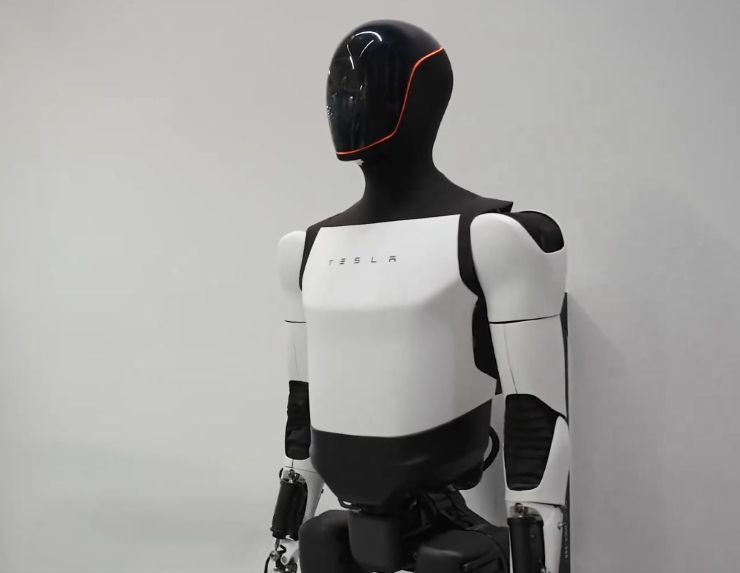
1. Tesla Optimus Gen 2
Tesla’s Optimus Gen 2 represents the next evolution of its general-purpose humanoid platform. Engineered for both industrial and domestic tasks, it brings together advanced AI, improved joint articulation, and Tesla’s signature hardware efficiency.
Overview
Optimus Gen 2 features a sleeker, more refined build with enhanced mobility. It is designed to perform repetitive factory tasks, support manufacturing workflows, and even handle household automation. The robot continuously improves by learning from real-world operational data.
Key Metrics:
- Height: Approximately 5’8” (1.73 m)
- Weight: Around 125 lbs (57 kg)
- Degrees of Freedom: Enhanced joint mobility for precise manipulation
- Primary Use: Industrial assistance and home automation
- Estimated Price: ~$30,000
2. Boston Dynamics Electric Atlas
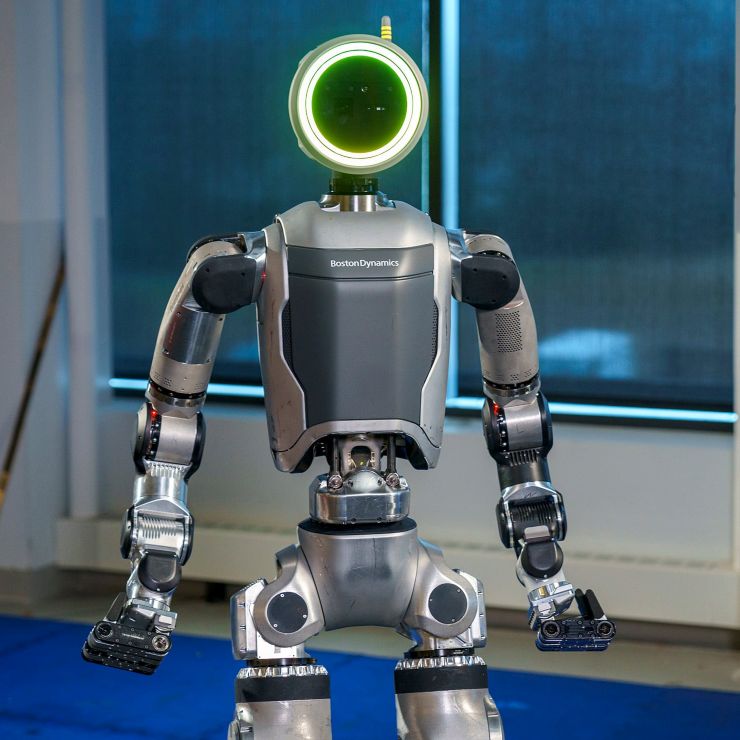
Electric Atlas is the latest generation of Boston Dynamics’ iconic humanoid robot, engineered for dynamic movement in demanding environments. Known for its impressive agility and balance, it sets a benchmark in human-like locomotion.
Overview
Electric Atlas executes complex motions with precision, including running, jumping, and advanced maneuvers such as backflips. It is tailored for use in industrial inspections, research labs, and search-and-rescue missions where mobility and adaptability are essential.
Key Metrics:
- Height: Approximately 1.5 m
- Weight: Around 75 kg
- Capabilities: Exceptional balance and agility with dynamic locomotion
- Primary Use: Industrial inspection, search and rescue, research
- Unique Feature: Advanced electric actuators for precise motion control
3. Unitree Robotics – G1
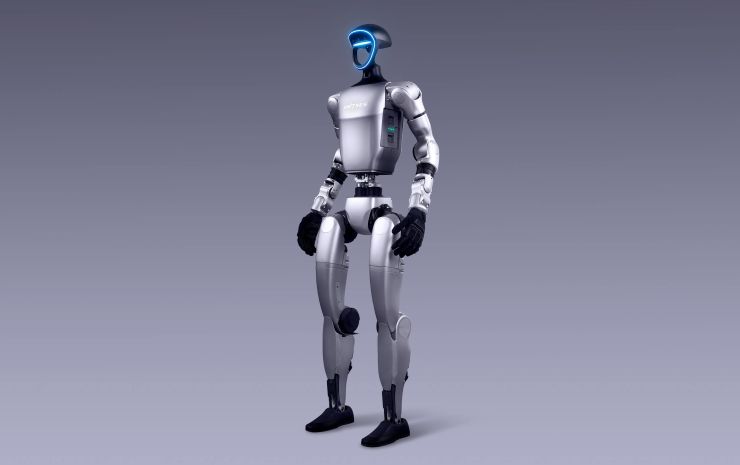
The Unitree G1 delivers an ideal blend of agility, affordability, and real-world efficiency. Designed with practical deployment in mind, it stands out as a versatile solution for service industries and research environments.
Overview
Optimized for rapid and stable movement, the G1 adapts well to compact spaces and fast-paced workflows. Its efficient energy consumption and practical design make it a strong candidate for logistics, service operations, and academic research.
Key Metrics:
- Height: ~1.4 m
- Weight: 40–50 kg
- Battery Life: 2–3 hours
- Primary Use: Automation in logistics and services
- Design Focus: Cost-effective, agile performance
4. Agility Robotics – Digit
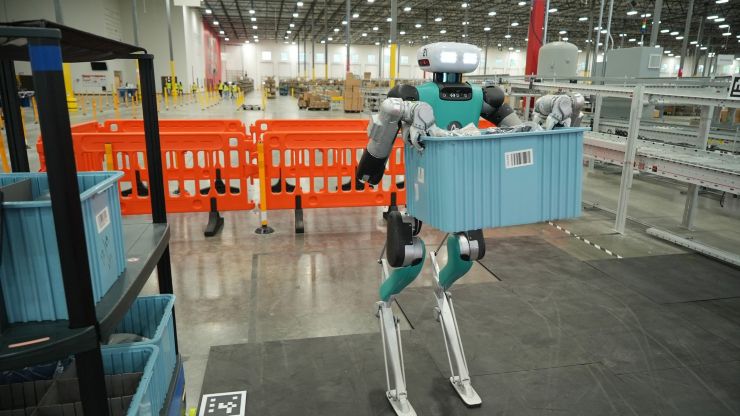
Digit is one of the most recognizable humanoids thanks to its natural gait and dynamic mobility. Built to navigate complex urban environments, Digit excels in logistics tasks and package delivery workflows.
Overview
Digit’s bipedal design enables it to move across uneven surfaces, handle payloads, and adapt to real-world obstacles. It is engineered for speed, reliability, and seamless integration into logistics ecosystems.
Key Metrics:
- Height: ~1.2 m
- Weight: ~30 kg
- Payload Capacity: Up to 15 kg
- Battery Life: ~4 hours
- Primary Use: Urban navigation, logistics automation
5. Apptronik – Apollo
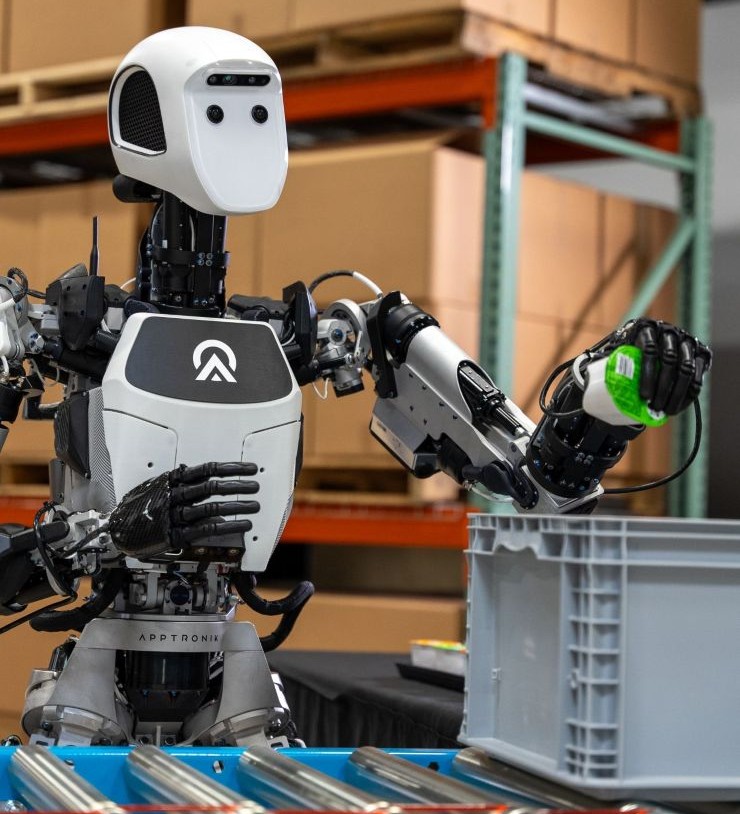
Apollo is Apptronik’s flagship industrial humanoid robot, created to handle heavy-duty tasks with precision and consistency. It is built to support modern manufacturing environments where accuracy and strength are essential.
Overview
Apollo combines robust mechanical engineering with advanced AI to perform complex industrial operations. With strong lifting capabilities and refined motion control, it assists in assembly tasks, material handling, and repetitive industrial workflows.
Key Metrics:
- Height: ~1.7 m
- Weight: ~60 kg
- Degrees of Freedom: 28+ joints
- Battery Life: ~5 hours per charge
- Primary Use: Industrial automation, manufacturing support
Conclusion
The top 5 humanoid robots of 2025 showcase the remarkable progress being made in robotics and AI. Whether it’s Tesla’s general-purpose design, Boston Dynamics’ groundbreaking mobility, or Apollo’s industrial strength, each robot pushes the boundaries of what machines can accomplish.
As these platforms continue to develop, they promise to reshape industries, enhance productivity, and redefine the future of human-robot collaboration.